


Views: 0 Author: Site Editor Publish Time: 2026-06-17 Origin: Site


Installing a reverse osmosis system is often marketed as a simple weekend DIY project, but improper installation routinely leads to micro-leaks, ruptured membranes, and compromised water quality. The gap between a functional setup and a failing one lies in overlooked technical requirements. You must account for inlet water pressure calculations, wastewater routing geometry, feed water temperature limits, and material compatibility to achieve success.
This guide breaks down the precise, step-by-step technical implementation for installing an RO system. It covers pre-installation diagnostics, component integration, and system sanitization protocols to help ensure long-term, fail-safe operation. By following these rigorous plumbing and chemistry guidelines, you can build a stable, high-efficiency purification setup. We outline the exact mechanical thresholds, required tools, and chemical limitations that separate a professional-grade installation from a costly plumbing disaster.
Material Compatibility is Non-Negotiable: Reverse osmosis lowers water pH by 1-2 points. Never use copper piping for the pure water line; strictly utilize CPVC, PVC, PEX, or stainless steel to prevent heavy metal leaching.
Pressure Dictates Performance: For every 100 ppm of Total Dissolved Solids (TDS) in the feed water, the system requires 1 extra psi of osmotic pressure. Operating below 60 psi will drastically increase wastewater output.
Strategic Drain Placement Prevents Noise and Odor: Drain saddles must be installed above the P-trap to block sewer gas, and placing the saddle on a horizontal pipe segment eliminates disruptive "dripping" noises.
Mandatory Flushing Protocol: New systems require an initial 10-15 minute carbon dust flush, followed by a 2-hour pressurized micro-leak test and a minimum of three complete tank fill-and-dump cycles before the water is safe for consumption.
Success begins with understanding the physical properties of your municipal or well water supply. You must evaluate Total Dissolved Solids (TDS) against your incoming water pressure. The relationship is governed by the osmotic pressure formula. Feed TDS directly dictates the required incoming water pressure. For every 100 ppm of TDS present in your water, the unit requires an additional 1 psi of pressure just to overcome natural osmosis and force water through the 0.0001-micron membrane pores.
| Feed Water TDS (ppm) | Required Osmotic Pressure (psi) | Absolute Minimum Feed Pressure (psi) | Ideal Operating Pressure (psi) |
100 - 200 | 1 - 2 | 35 | 60 |
300 - 500 | 3 - 5 | 40 | 65 |
600 - 1000 | 6 - 10 | 45 | 70 |
1000+ (Well Water) | 10+ | 55 | 80+ (Requires Booster) |
You must establish baseline operational pressure metrics before opening the box. The absolute minimum functional pressure is 35 psi, but the ideal target sits at 60 psi. If operates at 40 psi and you have a high TDS load of 400 ppm, your effective driving pressure drops significantly, leading to a trickle of pure water and massive wastewater runoff. Temperature also controls membrane performance. Feed water must never exceed 105°F (40°C). Hot water physically degrades the delicate semi-permeable membrane, causing irreversible structural failure. Conversely, you must strictly respect maximum pressure thresholds. Never subject the unit to pressure exceeding 150 psi. Doing so routinely causes catastrophic membrane rupture and severe flooding.
The chemistry of purified water differs drastically from standard tap water. The intensive purification process strips away dissolved minerals, particularly calcium and magnesium. This removal disrupts the water's natural buffer capacity, dropping the pH by 1 to 2 points. The resulting purified liquid is highly aggressive and mildly acidic. It actively seeks to pull ions from surrounding materials to rebalance itself chemically.
Due to this chemical behavior, you must never route purified water through existing copper pipes. Aggressive water will continuously strip copper ions from the pipe walls, leading to pinhole leaks in the plumbing and toxic heavy metal leaching into your drinking water. Strict adherence to approved materials for pure water distribution is mandatory.
Approved Materials: CPVC, PEX (Types A, B, or C), high-grade schedule 40 PVC, and 316L stainless steel tubing and fittings.
Prohibited Materials: Copper, galvanized steel, brass, and iron pipe.
Standard under-sink models require adequate spatial clearance to function and allow for future filter changes. You need a minimum of 24 inches in width, 24 inches in height, and 18 inches of depth of completely unobstructed space to house the manifold, pre-filters, and pressurized 3.2-gallon storage tank. Remove all supplies before beginning the layout process to avoid spatial conflicts.
Determine your electrical prerequisites early, especially for configurations utilizing UV lamps or electric booster pumps. These components require a nearby power source that cannot be shared with heavy motorized appliances. An independent 110V, 20 Amp breaker prevents circuit overloads. Finally, verify drain configuration. An air gap drain setup prevents back-siphoning. If a sewer backup occurs in the municipal line, the physical gap stops contaminated water from being drawn up into your clean filtration unit.
Evaluating the Return on Investment (ROI) of a permeate pump during initial setup helps maximize system efficiency. Many users confuse permeate pumps with booster pumps, but they serve entirely different mechanical functions regarding water pressure management.
| Pump Type | Power Source | Primary Mechanical Function | Wastewater Impact |
Permeate Pump | Hydraulic (Non-electric) | Uses wastewater kinetic energy to force pure water into the tank, mitigating tank backpressure. | Reduces wastewater by up to 80% and extends pre-filter lifespan. |
Booster Pump | Electrical (110V AC) | Physically pushes incoming feed water harder against the membrane face. | Slightly improves ratio, but mainly used to fix low feed pressure. |
The technical difference involves energy conversion. A non-electric, hydraulic permeate pump harnesses the kinetic energy from the pressurized wastewater line. It uses this energy to push pure water into the pressurized storage tank, physically isolating the membrane from the tank's increasing backpressure. An electric booster pump simply forces low-pressure incoming water up to an acceptable operating range (typically raising 30 psi up to 65 psi). Adding a permeate pump reduces wastewater discharge by up to 80% and improves tank fill speed, extending the lifespan of your carbon pre-filters by processing less total water.
Begin with a strict shut-off and depressurization protocol. Turn off the main cold water angle stop valve under the sink. Next, open the existing faucet and let it run for several minutes. This action drains residual water from the vertical pipes and purges trapped air, preventing sudden pressure bursts when you open the line.
Implement safe wrenching techniques when installing the feed water adapter tee. Place the highly absorbent towel directly under all fittings. This step proves necessary when removing old supply nuts containing degraded rubber O-rings, which hold hidden residual water. When applying Teflon tape to threaded connections, observe strict mechanical best practices. Wrap the tape clockwise in the direction the nut will tighten, applying three to four full rotations. Skip the very first thread entirely. This prevents microscopic tape fragments from shearing off inside the pipe, traveling downstream, and internally clogging the semi-permeable membrane.
Establishing the dispensing point requires careful routing protocols. You can utilize an existing soap dispenser hole, drill a new hole using a diamond bit, or implement a wireless bypass system. If you are mounting a traditional air-gap faucet, pay close attention to the triple-tube configuration at the base of the shank.
Strict air gap tubing guidelines govern this step. The 3/8-inch black drain tubing must run seamlessly downward from the faucet base directly into the drain pipe saddle. Gravity acts as the only force moving this wastewater. You are explicitly prohibited from creating U-dips, loops, sagging sections, or sharp bends in this line. Any upward travel creates immediate backpressure. Because the air gap remains open to the atmosphere by design, backpressure will cause the wastewater to overflow directly out of the faucet base and flood your kitchen counter.
Connecting the discharge line to your plumbing requires drilling into the existing sink tailpiece to mount the drain saddle. The absolute placement rule dictates that the drain saddle must be positioned strictly above the P-trap. If you place it below the P-trap, toxic sewer gases (including hydrogen sulfide and methane) will travel up the drain line, bypass the air gap, and enter your kitchen environment.
Many complain about a relentless ticking noise after installation. Apply this professional plumbing tip for noise mitigation: drill the 1/4-inch drain hole on a horizontal or curved section of the tailpiece whenever possible. If forced to use a vertical pipe, angle the saddle slightly off-center. This prevents the wastewater from dripping straight down into the standing water of the P-trap. Allowing the water to run quietly down the inner sidewall of the PVC pipe completely eliminates the annoying ticking noise.
Modern manifolds rely heavily on push-to-connect polyethylene (PE) tubing. Understanding the mechanics of quick-connect fittings ensures a dry cabinet. Cut the tubing perfectly square. Insert the PE tubing firmly into the collet until you feel it hit the hard stop at the back of the fitting (usually about 5/8 of an inch deep). Then, apply a light, mandatory pull backwards. This reverse tension locks the internal metal collet teeth into the plastic and permanently seals the internal O-ring.
If your setup includes a Leak Stop Valve, adhere to a strict handling warning. These smart leak detectors utilize a highly compressed, moisture-sensitive absorbent pad. When making connections near this valve, ensure your hands are bone dry. The internal absorbent pad will expand instantly and permanently lock the valve shut if exposed to a single drop of sweat or a stray droplet of water. This mistake requires a full replacement of the cartridge before you can turn the water on.
Do not open the main valve once assembly concludes. Perform a manual pre-fill step first. Unscrew the pre-filter housings slightly and let them fill with water slowly before tightening them down to seal. This action purges massive pockets of trapped air from the lines, preventing pneumatic shock from damaging the membrane elements.
Next, execute the black-water flush. Close the ball valve on top of the pressurized storage tank. Before allowing the storage tank to fill, open the dispensing faucet. Turn on the main feed water. The pressure will push water through the newly installed carbon blocks. Run the system for 10-15 minutes. The water will initially sputter and appear jet black. This flushes out loose carbon dust, fines, and manufacturing preservatives. Continue running until the water runs completely clear and steady.
Bacterial contamination during manufacturing and shipping requires proactive management. Follow the manufacturer-standard sanitization process. Introduce one teaspoon of unscented 5.25% household bleach (sodium hypochlorite with no thickeners or fragrances) into the first pre-filter housing before inserting the membrane. Let this chlorinated water push through the empty manifolds to sterilize the internal pathways, then flush thoroughly.
Once sanitized, insert the membrane and fully assemble the unit. Establish a strict micro-leak testing framework. Turn on the feed water, open the tank valve, and close the dispensing faucet. Allow the system to fully pressurize. Sit and observe all tubing connections, threaded housings, and the drain saddle for a mandatory 2-hour window. Micro-leaks often take time to appear as pressure slowly builds to the maximum capacity of the storage tank. Do not close the cabinet doors until this window passes perfectly dry.
Perform the mandatory final flushing protocol. Leave the dispensing faucet closed and allow the storage tank to fill completely. Depending on your municipal water pressure and membrane rating (measured in Gallons Per Day, or GPD), this takes between two to four hours.
Once the tank is heavy and full, open the faucet and let the water run entirely dry until it slows to a drip. You are throwing this first batch of water down the drain. Close the faucet and repeat this cycle. Must execute a minimum of three complete tank fill-and-dump cycles. This removes the food-grade glycerin coating applied to the membrane during factory packaging.
Under-sink models handle drinking water for a single family, larger applications require fundamentally different architecture. Comparing under-sink Point of Use (POU) systems to whole-house Point of Entry (POE) configurations reveals significant infrastructure changes. POU models utilize existing municipal pressure, while POE designs demand dedicated electrical, storage, and pumping setups.
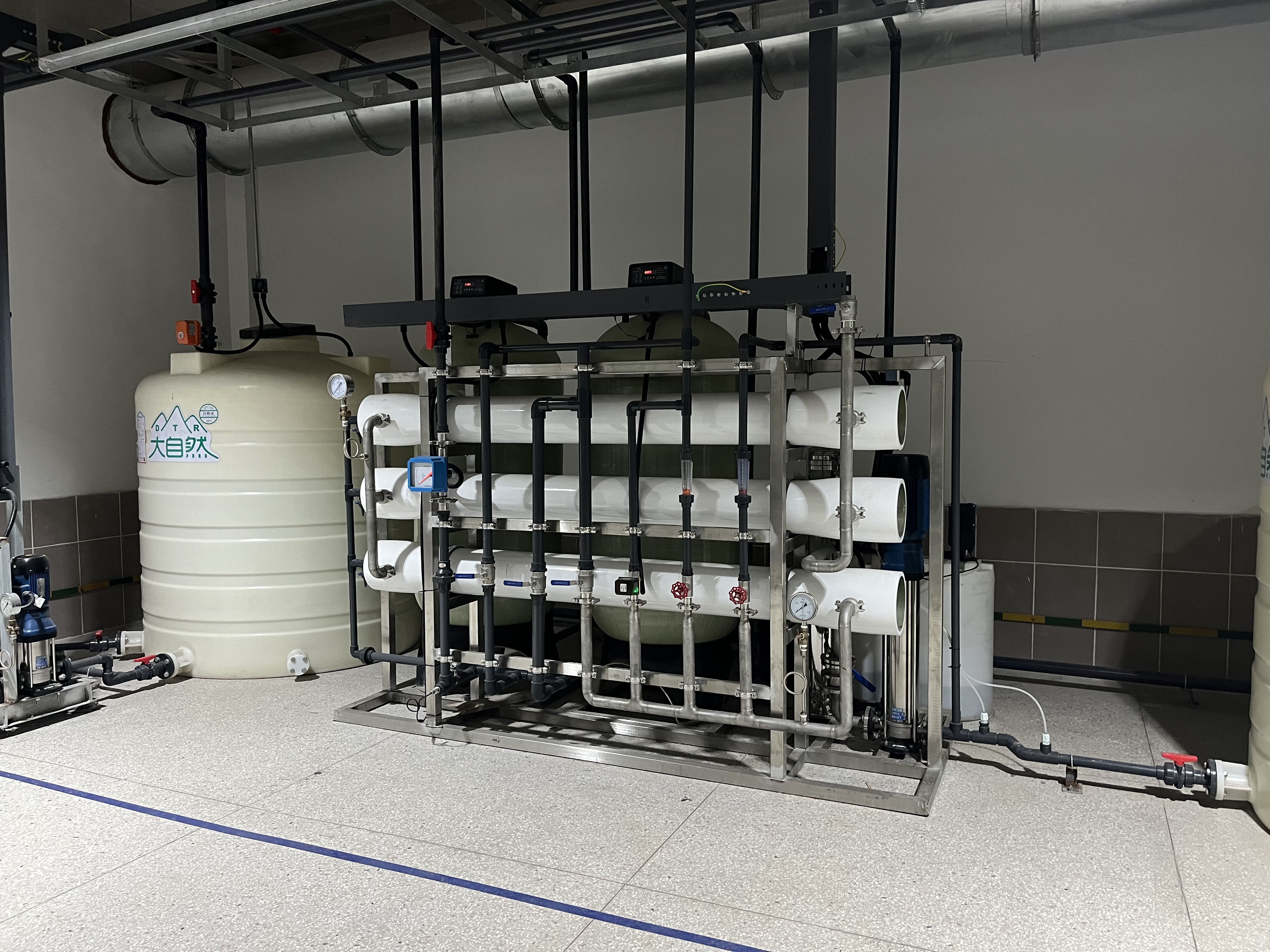
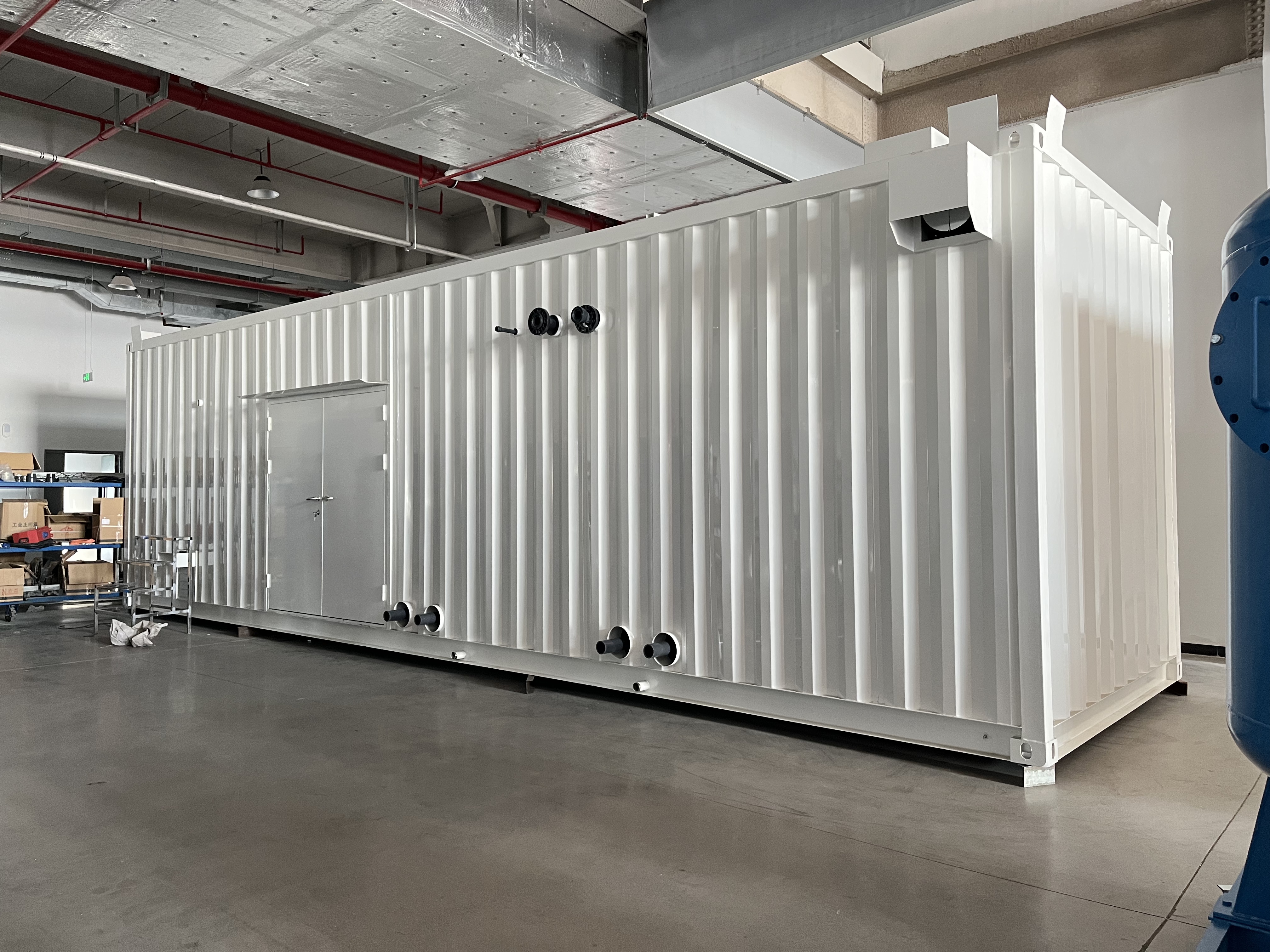
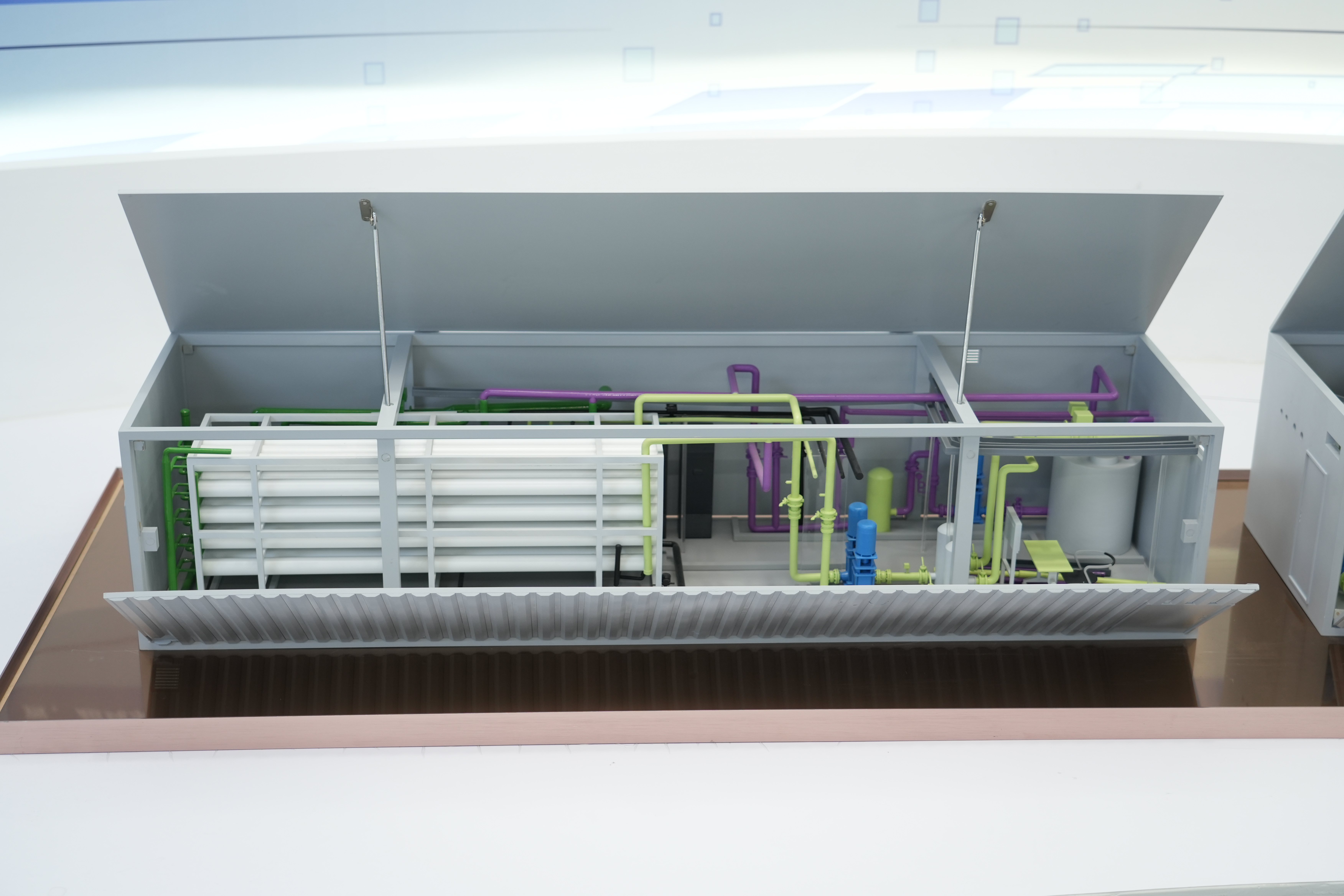
Installing an industrial reverse osmosis system alters the installation scope entirely. These massive skids require 220V/60Hz single-phase or three-phase power integrated with Variable Frequency Drives (VFDs). They utilize high-capacity, multi-stage centrifugal booster pumps. Installation requires complex pressure tuning. Technicians must utilize concentrate valves, recycle lines, and throttle valves to precisely balance the operational pressure between 150-250 psi across multiple membrane arrays, preventing hydraulic failure and optimizing the recovery rate.
Scaling up introduces severe vulnerability to source water chemistry. Statistics show that 99.9% of commercial membrane failures stem from poor pre-treatment, specifically hard water scaling and heavy iron fouling. Pumping raw, hard well water directly into a commercial membrane will scale the micropores solid within days, instantly voiding manufacturer warranties and halting production.
To prevent this, complex pre-filtration and wastewater treatment integration is mandatory. Installers must evaluate the Langelier Saturation Index (LSI) of the feed water. You must synchronize your water treatment equipment using advanced Programmable Logic Controllers (PLCs). Installers use dry contact relays and liquid level float switches to communicate between devices. This logic physically locks out the main booster pump while upstream water softeners or iron filters undergo their regeneration and backwash cycles. This safety interlock prevents the unit from accidentally sucking heavily chlorinated or brine-filled wastewater into the delicate thin-film composite membranes.
Secure a digital TDS meter to determine your baseline water quality, calculate your required osmotic pressure, and verify membrane rejection rates.
Test your under-sink water pressure using a standard threaded gauge to verify you meet the 35 psi minimum threshold before purchasing a non-boosted unit.
Verify your plumbing pipe materials downstream of the installation site to ensure zero copper or galvanized steel components are exposed to the aggressive purified water.
Clear a 24x24-inch space entirely and map your electrical outlet availability if opting for a UV lamp, electric booster pump, or smart leak detector.
A: A standard under-sink unit typically takes 1 to 2 hours to install for a technically proficient homeowner. This timeframe assumes you have standard PVC or ABS drain pipes and do not require complex modifications like drilling through thick granite countertops or routing new electrical outlets for booster pumps.
A: Dripping noises occur when the drain saddle is installed vertically, causing wastewater to drop directly into the standing water of the P-trap. To fix this, remount the drain saddle on a horizontal or slightly curved section of the tailpiece so the water glides silently down the pipe's interior wall.
A: No. Reverse osmosis removes minerals, which drops the water's pH by 1 to 2 points and makes it highly aggressive. Running this purified water through copper piping will cause heavy metal corrosion, leading to pinhole leaks and toxic copper leaching into your drinking water supply.
A: Traditional systems operate at a 4:1 ratio, sending four gallons of wastewater down the drain for every one gallon of pure water produced. Adding a hydraulic permeate pump mitigates tank backpressure and reduces this wastewater output by up to 80%, significantly improving overall efficiency.
A: Yes. Unlike DIY residential units, commercial setups require specialized electrical relays, three-phase power integration, throttle valve tuning to balance multi-membrane pressure, and complex communication wiring with heavy pre-treatment systems using dry contact switches to prevent immediate membrane fouling.
A: Low or zero water flow is usually caused by a closed tank valve, insufficient feed water pressure operating below 35 psi, an airlock in the lines, or a triggered smart leak-stop mechanism. If the leak valve's internal pad absorbs moisture during installation, it permanently locks the flow.


