


Views: 0 Author: Site Editor Publish Time: 2026-03-05 Origin: Site


An automatic chemical dosing system adds exact amounts of chemical into water or other streams without people doing it by hand. This system has sensors that check water quality and put in chemicals to control things like pH or smell. Many industries use a chemical dosing system to make water safe and steady. A fully automatic dosing system keeps chemical levels the same and lowers mistakes made by people.
ECOSPARK, a global leading brand in intelligent water treatment and dosing solutions backed by Shanghai Emperor of Cleaning High-tech Co., Ltd., a national high-tech listed enterprise with decades of expertise, specializes in intelligent automatic chemical dosing systems, green chemical technologies, energy-saving solutions, and zero-discharge recycling systems. Featuring real-time monitoring, high-precision sensors, closed-loop control, and professional dosing pumps, its fully automatic systems ensure accurate, stable, and consistent chemical dosing, reduce manual errors, lower chemical waste, enhance operational safety and efficiency, and help industries comply with environmental standards. Trusted worldwide by airports, resorts, industrial plants, and commercial facilities, ECOSPARK integrates global standards with localized services, turning water challenges into sustainable value with eco-friendly innovation for cleaner water, a greener planet, and a smarter future.
Automatic chemical dosing systems put exact amounts of chemicals in water. This keeps the water safe and the same every time. People do not need to add chemicals by hand.
Sensors watch the water all the time. The system can change chemical levels fast if needed. This stops problems before they get worse.
There are different dosing pumps for different jobs. Each pump gives the right chemical in a safe way.
Feedback loops help keep water quality good. They check and change chemical dosing all the time if needed.
The system needs regular checks and care. This makes it safer and cuts down on waste. It also helps follow environmental rules.
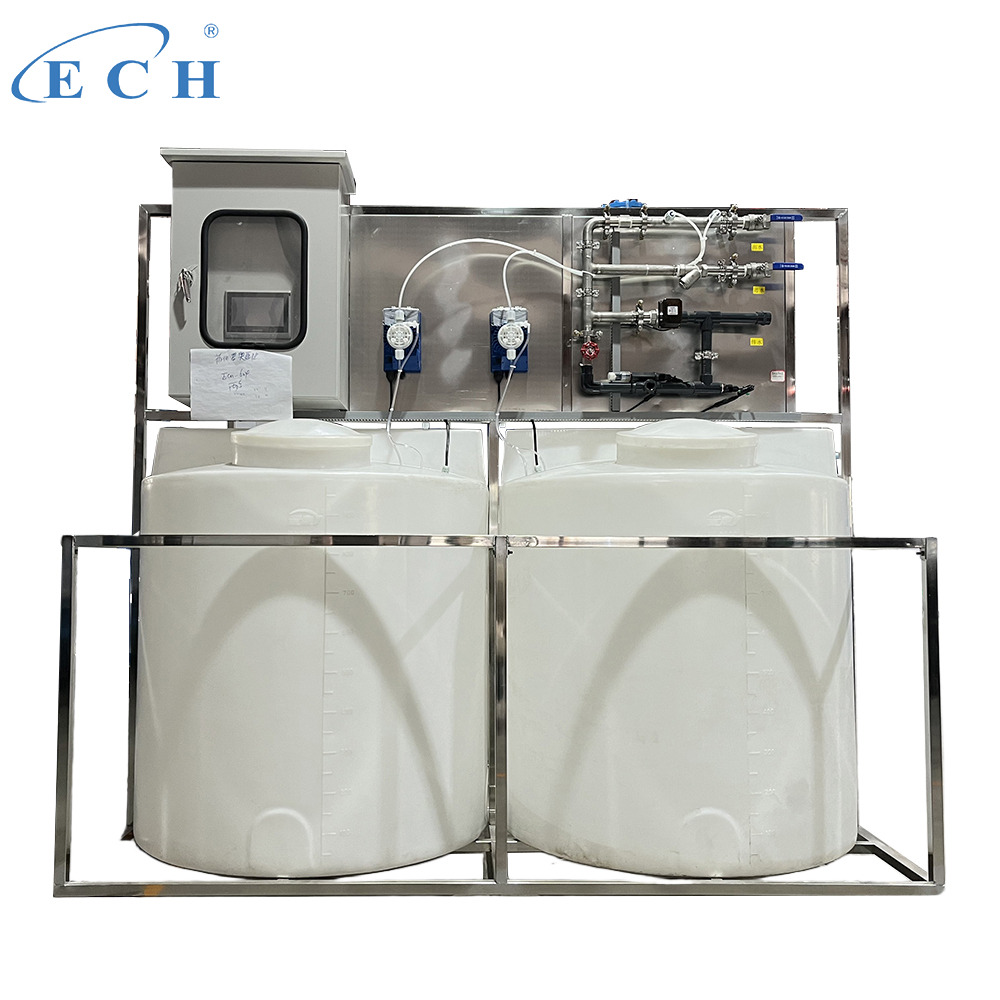
An automatic chemical dosing system keeps water quality steady by using a closed-loop control process. First, the system finds changes in water. Sensors check things like pH and chlorine. The control unit gets this data and figures out how much chemical is needed. The dosing pump puts the right amount of chemical into the water. The system checks the water again and changes the dosing if needed. This process keeps repeating to keep the balance.
Closed-loop control lets chemical dosing systems react fast to changes. The system does not need people to check it. Automation makes sure dosing happens at the right time and with the right amount.
Chemical dosing systems use real-time monitoring. Sensors watch water quality all the time. They check pH, conductivity, and other chemical levels. The control unit uses this information to decide when to dose. Online sensors make the process quick and correct. The system can find problems before they get worse.
Sensors used in chemical dosing systems include:
pH sensors
ORP sensors
Conductivity sensors
Chlorine sensors
These sensors help keep chemical levels safe and steady. Automation lowers mistakes and makes the system more reliable.
The dosing pump is very important in a chemical dosing system. It moves chemicals from storage tanks into the water. There are different kinds of dosing pumps:
Dosing Pump Type | How It Works | Common Uses |
|---|---|---|
Diaphragm Pump | Uses a flexible diaphragm to push fluid | Precise dosing, safe for corrosive chemicals |
Peristaltic Pump | Squeezes tubing to move liquid | Gentle dosing, good for sensitive chemicals |
Piston Pump | Uses a piston to force liquid | High-pressure dosing, robust for tough jobs |
Each pump type works best for certain jobs. The system picks the right pump for the chemical and the job. Automation controls how fast and when the pump works. This makes sure the right amount of chemical goes into the water.
Feedback is needed in chemical dosing systems. After dosing, sensors check if water quality is better. The control unit looks at the new data and compares it to the goal. If the chemical level is not right, the system changes the dosing. This feedback loop keeps the process correct.
Steps in the feedback process:
Sensor checks water quality after dosing.
Control unit sees if the goal is met.
System adds or lowers dosing as needed.
Process repeats until water quality is steady.
Automation makes these changes fast. The system does not wait for people to check. Chemical dosing systems use feedback to stop too much or too little dosing. This keeps equipment safe and makes water safe.
Tip: Automatic chemical dosing systems save time and cut mistakes. They use sensors, pumps, and control units to keep chemical levels right. Automation helps industries stay safe and work better.

Sensors and detectors check water quality. They look at pH, chlorine, and conductivity. These devices send data to the control unit right away. The system uses this information to decide how much chemical to add. Accurate sensors make the process safe and dependable.
The control unit is like the brain of the system. It gets signals from sensors. It figures out how much chemical is needed. The control unit tells the dosing pump what to do. This keeps the process running well. Many control units have screens for easy checking.
Note: A good control unit stops mistakes and keeps things safe.
The dosing pump moves chemicals from storage to water. There are different kinds of pumps. Diaphragm pumps use a soft membrane to push liquid. Peristaltic pumps squeeze tubes to move chemicals. Piston pumps use a piston for strong dosing. Each pump works best for certain jobs. The system picks the right pump for the task.
Pump Type | Main Feature | Best Use |
|---|---|---|
Diaphragm | Precise, safe for acids | Accurate dosing |
Peristaltic | Gentle, easy to maintain | Sensitive chemicals |
Piston | Strong, high pressure | Tough dosing jobs |
Storage tanks hold chemicals before they are used. Some tanks have mixers inside. Mixers keep the chemical even and ready. Good storage stops spills and keeps things safe. The system uses these tanks so chemicals are always ready.
Tubing and valves move chemicals from storage to where they are needed. Valves control flow and stop leaks. Safety features include alarms and shut-offs. These parts protect people and equipment. Good design makes the system safe and reliable.
Tip: Check tubing and valves often to stop leaks and keep the system working.

Chemical dosing systems are important for keeping water clean. They help control chemicals and make water safe. Here are some places where these systems are used in wastewater treatment:
Pump stations move wastewater from one spot to another. Rising mains are pipes that carry wastewater uphill. Chemical dosing systems add chemicals at these spots to stop bad smells. They also help reduce corrosion in the pipes. The system puts in the right amount of chemical to protect the pipes. This keeps equipment safe and helps the environment.
Sewer manholes let workers reach pipes underground. These places can have strong smells and dangerous gases. Chemical dosing systems add chemicals to break down waste. They also control odors and lower gas buildup. This makes the area safer for workers and people nearby.
Treatment plants clean water before it goes back to nature. Sometimes water gets reused. Chemical dosing systems add chemicals to remove dirt and kill germs. They also balance pH levels. Sensors check water quality and adjust dosing as needed. This keeps the process steady and meets safety rules. Plants depend on these systems to work safely and smoothly.
Many industries use chemical dosing systems for other jobs. Factories use them to treat process water or cooling water. Power plants use dosing systems to control scale and corrosion in boilers. Food and beverage plants use dosing to keep water clean for making products. Each industry chooses the system that fits its needs.
Tip: Regular checks and maintenance help chemical dosing systems work well everywhere.
Automatic chemical dosing systems give many benefits to industries. They help control chemical levels very well. These systems keep water quality high, like in boiler water treatment.
Chemical dosing systems are very exact at every step. Sensors and control units work as a team. They measure and change chemical levels as needed. This teamwork makes sure the right amount is added. Good dosing stops using too much or too little chemical. Operators get the same results each time. Steady dosing keeps equipment safe and makes products better.
Exact measuring and delivery
Chemical levels stay steady
Less chance for people to make mistakes
Note: Being exact in chemical dosing gives better results and fewer issues.
Chemical dosing systems work faster by doing things automatically. Sensors check chemical levels and add only what is needed. This cuts down on waste and saves money. Being exact also means machines need less fixing. Companies do not spend as much on repairs.
Benefit | How It Helps |
|---|---|
Less chemical waste | Saves money and resources |
Fewer breakdowns | Lowers repair costs |
Faster operation | Increases productivity |
Being exact at every step helps companies use less and save more.
Safety is very important in chemical dosing systems. Automatic systems lower the chance of spills or contact. Alarms and shut-offs keep workers and machines safe. Good dosing keeps chemicals at safe levels. This helps companies follow safety and environmental rules. These systems also make it easy to keep records for checks.
Safer for workers
Easier to follow rules
Fewer accidents or emergencies
Tip: Check and maintain the system often to keep it safe and working well.
Automatic chemical dosing systems bring accuracy, speed, and safety to every job. These benefits help industries reach their goals and protect people and nature.
An automatic chemical dosing system keeps chemical levels right in water. It uses sensors, pumps, and control units to do this job. These systems help make water safe for people to use. Many companies use them for boiler water treatment. The system gives the right amount of chemicals each time. This helps save money and keeps workers safe. Automatic chemical dosing systems make it simple to control chemicals. They are also very dependable.
These systems help companies follow safety rules and make water better.
An automatic chemical dosing system helps keep boiler water safe. It puts chemicals in the water to stop scale, corrosion, and bacteria. This makes the boiler last longer and saves money on fixing it.
Sensors watch the water quality all the time. They check things like pH and chemical amounts. The system uses this information to add the right amount of chemicals.
Yes. The system only puts in what is needed. This stops too much chemical from going into the water. Companies save money and help the environment.
Automatic systems make spills and touching chemicals less likely. Safety tools like alarms and shut-offs keep workers and equipment safe.
Pump Type | Best For |
|---|---|
Diaphragm | Precise dosing |
Peristaltic | Gentle chemical dosing |
Piston | High-pressure jobs |
Each pump type works best for a different job in boiler water treatment.


