


Views: 0 Author: Site Editor Publish Time: 2026-07-28 Origin: Site


Selecting a water treatment chemical manufacturer cannot be reduced to price, brand familiarity, or a single certificate. A poor choice can create compliance exposure, unstable treatment performance, audit findings, emergency substitutions, and avoidable requalification work. The safer standard is broader: the buyer should examine regulatory fit, formulation control, batch consistency, application evidence, documentation quality, and supply reliability for the exact use case.
That context changes across potable drinking water systems, raw water pretreatment, boilers, cooling towers, industrial processes, and bulk delivery programs. The evaluation should predict safe use, regulatory acceptance, and consistent field operation, not merely verify that a product exists. A practical framework reviews EPA rules, NSF/ANSI/CAN standards, AWWA specifications, state approval expectations, PFAS readiness, operational controls, waste handling, and total cost of ownership. The sections below set out those standards in a procurement-ready format.
EPA drinking water regulations define enforceable water quality outcomes; NSF/ANSI/CAN 60 supports health-effects acceptance for drinking water treatment chemicals, but does not prove treatment performance, taste, odor, or total application suitability
NSF/ANSI/CAN 61 applies to drinking water system components and wetted materials, while other NSF standards apply to filters, UV systems, RO systems, distillers, emerging contaminant reduction, or lead-content requirements
Strong manufacturers can document ingredient traceability, toxicological review, batch consistency, QA/QC controls, change-control discipline, annual certification maintenance, and certified manufacturing locations—not just product availability
Evaluation criteria must differ across raw water treatment chemicals, boiler water treatment chemicals, and cooling tower water treatment chemicals because compliance triggers, chemistry, metallurgy, waste profiles, and operating risks are not the same
PFAS and other emerging contaminants now require buyers to evaluate chemical compatibility with GAC, ion exchange, membranes, residuals handling, and long-term waste disposal—not only contaminant removal claims
Lowest unit price often underestimates true cost; the more reliable comparison is total cost of ownership across dosing efficiency, compliance burden, downtime risk, freight, waste handling, sludge generation, and supplier responsiveness
A practical evaluation of Water Treatment Chemicals begins with the intended outcome. A municipal potable-water program, a raw water clarification step, a boiler loop, and a cooling tower program carry different risks. The buyer should define success before reviewing price sheets or product claims.
Classify the use case as potable, non-potable, regulated, process-critical, or support-service treatment.
Identify the required water quality outcome, including compliance limits and operating targets.
Confirm expected variation in source water, temperature, load, flow, and seasonal chemistry.
Define documentation needs for audits, state review, EHS approval, and customer assurance.
Set service expectations for delivery timing, emergency supply, troubleshooting, and technical support.
This sequence reduces the chance of comparing products that do not solve the same business problem.
Product quality, manufacturing quality, and supply quality are different tests. A strong formula can still create risk if production controls are weak. A reliable distributor can also create risk if it cannot explain certification scope or formulation changes.
Evaluation area | What should be checked | Why it matters |
Product quality | Chemistry class, active concentration, impurity profile, shelf life, dosage window, and compatibility | It predicts whether the chemical can work safely in the target process. |
Manufacturer quality | Certifications, formulation controls, toxicological review, batch release, and change management | It shows whether batches remain consistent over time. |
Supplier quality | Inventory, delivery reliability, packaging options, emergency response, and technical service | It affects uptime, operator confidence, and replenishment risk. |
Certification scope | Product name, certified site, category, maximum use level, label controls, and current listing | It confirms whether the documentation matches the actual purchase. |
For that reason, choosing a Water Treatment Chemicals Manufacturer is not identical to selecting a Water Treatment Chemicals Supplier. Both roles should be evaluated, especially when private labeling or distribution layers are involved.
Certification only helps when it matches the product and use condition. Chemicals added directly to drinking water often require NSF/ANSI/CAN 60 acceptance, or an equivalent approval where adopted by a state, province, utility, or project specification. Industrial chemicals used only in closed-loop systems may not need NSF 60, yet they still need safety, discharge, performance, and equipment-compatibility documentation.
Potable-water applications should be checked against the authority having jurisdiction.
Food, beverage, school, camp, and commercial-building uses may require additional assurance.
Private-label products should be matched to the actual certified manufacturer and plant.
Multi-jurisdiction programs should confirm recognition in each target market.
Treating NSF 60 as proof of treatment performance.
Confusing chemical certification with component certification under NSF 61.
Reviewing active ingredients while ignoring impurities, byproducts, or residual effects.
Comparing price per gallon instead of cost per treated volume.
Accepting outdated certificates or product names that do not match the listing.
Assuming one product line can serve raw water, boiler, and cooling applications equally well.
The Safe Drinking Water Act and EPA drinking water regulations define enforceable public-health outcomes. NSF standards support third-party review for health effects, materials, or device performance. AWWA specifications may apply to commodity chemicals and treatment practices when project documents require them. State drinking water programs, local health departments, and utility policies can add further approval steps.
Engineering references also matter. Reviewers may use Ten States Standards or similar guidance for PFAS treatment, residuals handling, redundancy, and bypass decisions. A credible manufacturer should understand how a chemical fits into this approval environment.
Public water systems face mandatory limits tied to contaminants, disinfectants, microbial risk, and monitoring. Chemicals added directly to potable water therefore require ingredient review, impurity review, and maximum use level discipline. Surface water rules and groundwater-under-the-influence conditions can raise the burden on coagulants, oxidants, disinfectants, corrosion inhibitors, pH adjustment programs, and filtration aids.
Regulatory area | Selected values | Practical buying implication |
Microbial framework | Cryptosporidium, Giardia lamblia, Legionella, and enteric viruses have MCLG values of zero. | Treatment technique performance affects coagulation, filtration, disinfection, and monitoring. |
Disinfectants | Chloramine 4.0 mg/L, chlorine 4.0 mg/L, chlorine dioxide 0.8 mg/L | Dose control and residual management must stay within enforceable limits. |
Disinfection byproducts | Bromate 0.010 mg/L, chlorite 1.0 mg/L, HAA5 0.060 mg/L, TTHMs 0.080 mg/L | Source-water pretreatment and oxidant choice can affect byproduct formation. |
Inorganic contaminants | Arsenic 0.010 mg/L, nitrate 10 mg/L as nitrogen, fluoride 4.0 mg/L, copper action level 1.3 mg/L, lead action level 0.015 mg/L | Chemistry selection can affect corrosion control, precipitation, adsorption, and residuals. |
Organics and radionuclides | Benzene 0.005 mg/L, atrazine 0.003 mg/L, glyphosate 0.7 mg/L, gross alpha 15 pCi/L, combined radium-226/228 5 pCi/L, uranium 30 µg/L | Media selection, residual handling, and disposal planning require early review. |
PFAS | PFOA and PFOS MCLG values of zero and enforceable MCLs of 4 ppt | Very low limits increase scrutiny on compatibility, contamination control, and waste liability. |
Treatment is more likely to be regulated when it treats all water produced by a public water system, is needed to meet primary standards, adds chemicals to water, creates public-health risk if it fails, or requires mandatory post-treatment monitoring. This distinction affects schools, campuses, commercial buildings, food plants, parks, and decentralized systems. A point-of-use polishing filter used for aesthetics may receive different review than a chemical process used for compliance.
Some state programs require review before treatment installation, chemical changes, bypass changes, or use-level changes. High-risk contaminants such as arsenic, radionuclides, nitrate, PFAS, and microbial hazards can trigger stricter expectations. Multi-state buyers should not assume acceptance in one jurisdiction creates automatic acceptance elsewhere.
Raw Water Treatment Chemicals should be judged against real source-water behavior. Typical categories include coagulants, flocculants, oxidants, pH control chemicals, adsorbents, powdered activated carbon, and specialty aids. The strongest evidence includes jar test results, pilot data, seasonal performance history, residual metal analysis, sludge characterization, and finished-water compliance impact.
The main risk is hidden cost. A chemical may support health-effects acceptance but still increase sludge hauling, residual metals, DBP formation potential, filter backwash, or membrane fouling.
Boiler Water Treatment Chemicals should be evaluated by boiler pressure, metallurgy, condensate return, oxygen control, deposit prevention, steam purity, blowdown impact, and wastewater discharge constraints. Documentation should include product specifications, SDS, dosage guidance, feed-system compatibility, condensate corrosion data, and blowdown implications. A low unit price can become expensive through fouling, corrosion, energy loss, or unplanned outages.
Cooling Tower Water Treatment Chemicals require a separate performance lens. Evaluation should cover cycles of concentration, scale control, corrosion rates, biofilm control, biocide strategy, Legionella risk management, metallurgy, and discharge profile. A weak microbiological program can turn a low-cost quote into a health, downtime, and liability problem.
Food and beverage facilities should review product-contact implications, ingredient acceptability, sanitation interactions, and audit records. Agricultural irrigation may focus on emitter plugging, salinity, runoff, and soil impacts. Commercial buildings need separate review for boilers, cooling towers, and Legionella management. Oil and gas users often prioritize scale, corrosion, biocide compatibility, transport, and wastewater management.
Chemical disinfection, coagulation, filtration, UV, RO, and multi-barrier systems may combine chemical standards with device-performance standards. If microbial reduction claims are made, buyers should ask which protocol supports the claim. The chemical should not interfere with UV transmittance, membranes, cartridges, media beds, residual targets, or online monitoring.
| Situation | When consolidation helps | When specialization is safer |
Multi-site procurement | Common documentation, fewer vendors, and easier inventory control | Different states or end uses require separate approvals. |
Potable and industrial facilities | One account team may streamline logistics. | Potable, boiler, and cooling risks require different evidence. |
Emerging contaminant projects | Standard chemicals may support routine pretreatment. | PFAS, radionuclides, and reuse systems need deeper engineering support. |
Formula review should go beyond the active ingredient. Buyers should check trace metals, solvents, byproducts, monomers, degradation products, phosphonates, surfactants, salts, and other impurities. Maximum use level assumptions should match actual dosing, upset dosing, and seasonal conditions. For drinking water use, intentional ingredients and relevant impurities should receive toxicological review.
Strong manufacturers use formal approval gates before commercialization, reformulation, private labeling, or market expansion. They review regulatory fit, compatibility, label claims, pilot needs, and raw-material sources. Product-specific pages, including ECH-102 High Performance Activation Cleaning Chemical and ECH-202 High-performance Coated Catalyst, should be used as starting points for documentation requests, not substitutes for technical review.
SDS, COA, technical data sheet, product specification, and batch records
NSF listing details, certified plant, chemical category, and maximum use level where relevant
AWWA conformance statement when project specifications require it
Change-control policy and written notification commitments
Storage, shelf-life, temperature, crystallization, segregation, and transport guidance
Lot traceability, retention-sample practice, and complaint escalation process
Batch-to-batch consistency often matters more than headline concentration. Reliable manufacturing controls include incoming raw-material qualification, supplier approval, in-process checks, finished-product release testing, instrument calibration, retention samples, deviation handling, and CAPA discipline. QA/QC gaps may later appear as pump drift, sludge changes, membrane fouling, corrosion excursions, residual instability, or failed audits.
Claims about safer, lower-toxicity, biodegradable, or renewable chemistry should be checked against real use rates and discharge limits. NPDES, RCRA, DOT, hazardous waste, and sewer-use requirements can change practical acceptability. A greener formulation may lower disposal burden, but it can also increase dose, freight, inventory volume, or treatment complexity.
PFAS rules increase scrutiny on upstream chemicals, treatment trains, residuals, spent media, and waste disposal. PFOA and PFOS MCLs at 4 ppt create little tolerance for contamination, cross-contact, or process interference. Hazard index requirements for certain mixtures add further complexity. Buyers should assess both contaminant removal strategy and secondary waste burden before approving a supplier.
GAC systems may use lead-lag vessels and at least 10 minutes of empty bed contact time where design guidance requires it. Some reviews reference 12x40 mesh coal-based GAC and iodine number expectations around 850 mg/g. Anion exchange systems may use lead-lag vessels and at least 2 minutes of empty bed contact time. RO can deliver strong PFAS removal, often above 90%, but concentrate disposal and scaling control become central risks.
Pretreatment chemistry can extend or shorten media life. Organic loading, turbidity, iron, manganese, hardness, surfactants, and fouling potential should be included in the chemical review.
Can they document compatibility with GAC, ion exchange, nanofiltration, or RO?
Do their chemicals contribute organics, surfactants, extractables, salts, or fouling risk?
Can they support pilot optimization, breakthrough monitoring, and waste-stream characterization?
How do they address spent media, brine, backwash, concentrate, and residual disposal?
Can they support engineering submittals or state review packages?
Potable reuse and advanced treatment trains may require multi-barrier design, pathogen log-reduction accounting, and chemical-contaminant control. Chemical programs should not interfere with advanced oxidation, adsorption, high-pressure membranes, UV transmittance, disinfection residuals, or online monitoring. Manufacturers serving these projects should provide compatibility data, operating support, and residuals guidance.
Operational risk often begins outside the formula. Buyers should verify compatibility with tanks, pumps, tubing, valves, injection quills, elastomers, and secondary containment. They should also confirm freezing risk, crystallization behavior, off-gassing, viscosity shifts, dilution instructions, ventilation, storage segregation, sunlight exposure, and spill response.
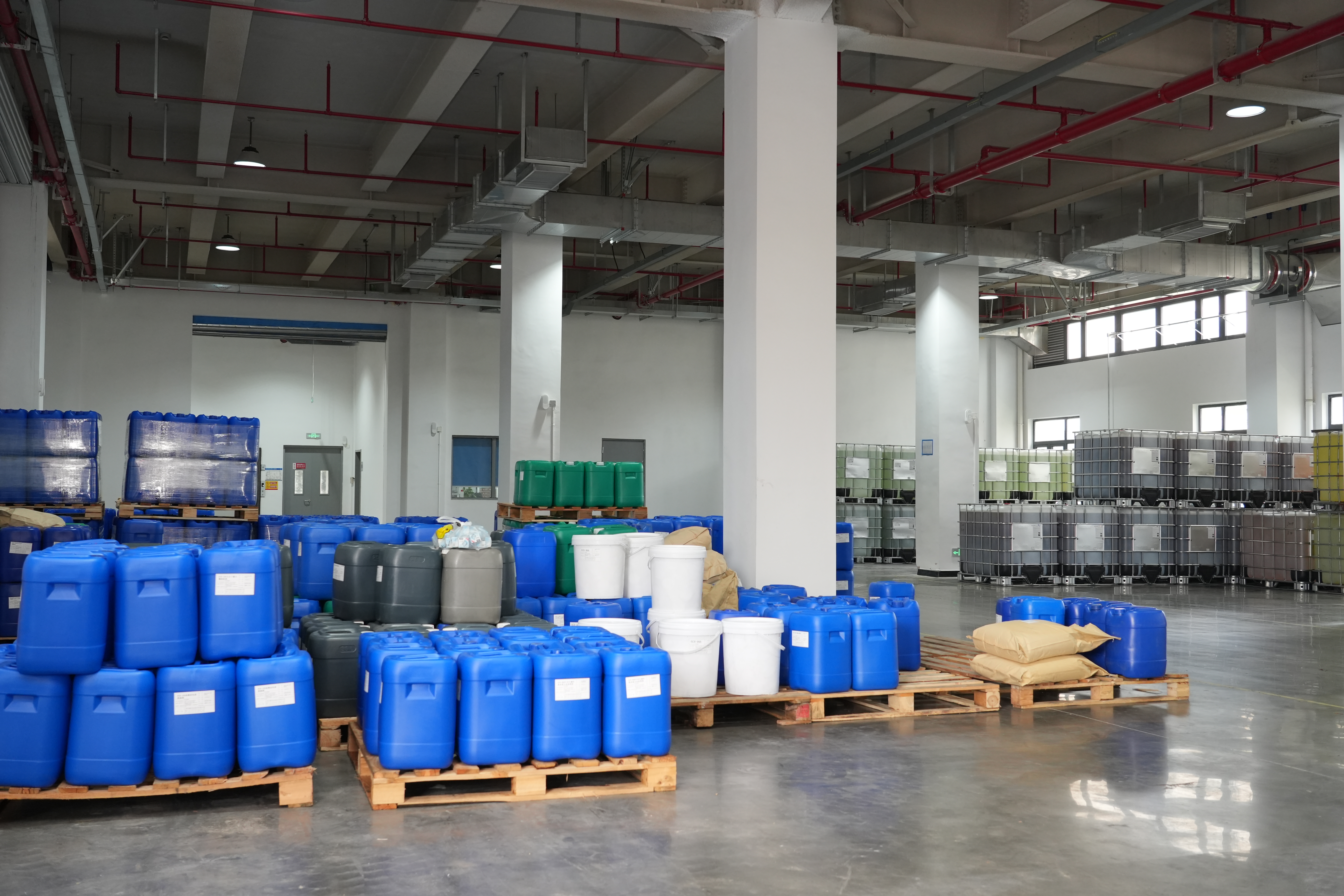
Bulk Water Treatment Chemicals require strong receiving controls. Delivery records should show lot traceability, tamper control, COA details, transfer procedures, and emergency contact information. Packaging should match site constraints, whether drums, totes, mini-bulk, returnable containers, or tanker delivery. Labels should match hazard class, certification status, maximum use level, storage guidance, and regulatory claims.
Some regulated systems face no-bypass expectations when treatment is required for compliance. Certain policies restrict hard-piped bypasses, manual bypass valves, or bypass-capable treatment heads. Buyers should ask how a supplier supports alarms, empty-tank protection, feed failure response, underdosing, overdosing, power-loss recovery, and corrective-action documentation.
Residuals management should be included before award. Coagulants and flocculants can raise sludge hauling costs. Ion exchange, GAC, adsorbents, membranes, and specialty media may create backwash, brine, spent media, or concentrate streams. Radionuclide residuals may require multi-agency review. PFAS residuals can create long-term disposal liability. Disposal burden can erase apparent chemical savings.
Supply resilience matters when feed interruption could create permit, safety, corrosion, or public-health risk. Buyers should review lead times, local stock, surge capacity, after-hours contacts, allocation risk, substitute-product workflow, and site-transfer controls. Dual sourcing can reduce outage risk, but it may increase approval and requalification work.
Dose efficiency and active use rate
Freight, storage footprint, packaging disposal, and handling labor
Feed-system cleaning, equipment wear, membrane cleaning, and downtime
Monitoring, reporting, certification review, and compliance administration
Sludge hauling, residual testing, backwash handling, and spent media disposal
Requalification after raw-material, concentration, formulation, or plant changes
Risk from missed deliveries, batch variability, permit exceedances, or emergency shipping
| Application | ROI drivers |
Raw water treatment | Lower turbidity excursions, longer filter runs, less sludge, and lower DBP formation potential |
Boiler treatment | Reduced scale, fewer tube failures, better heat transfer, and lower blowdown |
Cooling tower treatment | Higher cycles, lower corrosion, fewer microbiological events, and reduced water use |
Potable systems | Cleaner approvals, stronger audit records, and fewer emergency chemical changes |
PFAS and advanced treatment | Longer media life, delayed breakthrough, lower pressure drop, and predictable residuals handling |
Premium chemistry can be justified when the operating window is narrow, source water is variable, permits are strict, or waste handling is expensive. It may also be justified when downtime, corrosion, microbiological failure, or media replacement costs exceed the difference in chemical price. Procurement teams should compare delivered risk, not only unit price.
The more reliable model compares cost per treated volume and total system impact. It should include implementation, retraining, retesting, approval lag, inventory transition, waste burden, emergency freight, and audit risk. High-stakes claims should be validated through jar testing, pilot work, historical field data, or third-party documentation.
Relevant certifications and current listing status
Correct scope for product name, use level, category, and manufacturing location
Application-specific fit for potable, raw water, boiler, cooling, PFAS, or process use
Complete documentation package and transparent change-control policy
Manufacturing controls, QA/QC discipline, and supply-chain stability
Clear storage, handling, waste, and residuals guidance
Strong differentiators include pilot-testing support, jar testing, corrosion testing, microbial program review, membrane compatibility support, digital inventory tracking, delivery visibility, and multi-jurisdiction regulatory support. A broader portfolio can help when it is backed by application expertise, not only transactional sales coverage.
Vague compliance claims without scope details
No clear answer on raw-material changes, supplier changes, or plant transfers
Incomplete COAs, inconsistent specifications, or weak batch traceability
Overreliance on NSF 60 to avoid performance questions
No residuals, sludge, backwash, or waste-handling guidance
Refusal to provide written change-notification commitments
Scorecard area | Suggested treatment |
Certification scope, SDS, COA, and change control | Use as pass/fail gates before commercial scoring. |
Field performance and application fit | Weight by raw water variability, boiler pressure, cooling health risk, or PFAS exposure. |
Logistics and emergency supply | Weight heavily where chemical interruption can affect compliance or uptime. |
Waste, residuals, and TCO | Compare after disposal, monitoring, and requalification costs are included. |
The final selection process should turn technical evidence into controlled purchasing action.
Build one internal scorecard for each application type.
Confirm whether each use is potable, non-potable, regulated, or non-regulated.
Request current listings, certified plant details, SDS, COA, and change-control commitments.
Run jar tests, pilot validation, or site trials where performance risk is material.
Compare finalists on delivered risk, lifecycle cost, and supplier accountability.
A: NSF/ANSI/CAN 60 applies to chemicals added directly to drinking water and evaluates health effects, ingredients, impurities, and maximum use levels. NSF/ANSI/CAN 61 applies to drinking water system components and wetted materials, such as tanks, valves, piping, and coatings.
A: No. NSF 60 supports health-effects acceptability under defined use conditions. It does not certify treatment efficacy, taste, odor, dose efficiency, sludge reduction, corrosion control, or site-specific optimization. Field evidence is still required.
A: No. NSF 60 is mainly relevant to chemicals added directly to drinking water. Boiler, cooling tower, and many industrial process chemicals may be evaluated under different safety, discharge, performance, and equipment-compatibility criteria.
A: Core documents include SDS, COA, technical data sheet, product specification, batch traceability details, certification scope, certified manufacturing location, maximum use level, change-control policy, storage guidance, handling guidance, and waste or residuals guidance.
A: The comparison should include delivered cost, lot consistency, packaging options, transfer procedures, emergency supply, technical support, documentation quality, certification scope, change-control commitments, and cross-contamination controls during storage and delivery.
A: No. Each application has different compliance triggers, chemistry, metallurgy, microbial risk, waste profile, and operating economics. A credible supplier should provide application-specific evidence rather than one generic compliance package.
A: PFAS limits increase scrutiny on pretreatment compatibility, contamination control, residuals, and disposal liability. Buyers should ask how the chemical affects GAC, ion exchange, RO, concentrate disposal, spent media, and long-term waste handling.


