


Views: 0 Author: Site Editor Publish Time: 2026-09-02 Origin: Site


Industrial water purification requires predictable, scalable particulate removal. Underspecified filtration systems often lead to premature fouling, excessive backwash water waste, and downstream equipment failure. Selecting the correct filtration system requires balancing flow rates, micron capture efficiency, and footprint constraints. You must also manage the total cost of ownership associated with media replacement and automated maintenance.
This guide provides an engineering-led framework for evaluating and specifying a Sand Filter for industrial and high-volume commercial applications. We cover sizing parameters, media selection, and operational trade-offs to ensure your facility maintains optimal water quality. By understanding the core mechanics of depth filtration, you can make informed decisions that protect your capital equipment and reduce operational downtime.
Filtration Precision: Multi-media filtration typically offers superior suspended solids removal compared to single-media sand filtration; actual filtration performance depends on the filter media configuration, operating flow rate, and raw water quality.
Sizing is Flow-Dependent: Optimal industrial service flow rates range from 4–7 gpm/ft⊃2;, requiring precise vessel diameter calculations to prevent media channeling.
Maintenance Triggers: Automated backwashing should be initiated at a 3–7 PSI pressure drop differential; delaying backwash degrades the U-shape efficiency curve of particulate capture.
Material Durability: Filter vessel materials should be selected according to water chemistry, corrosion conditions, operating pressure and temperature.
A sand filter does not act as a simple sieve. It utilizes depth filtration to trap particles throughout the entire media bed. The process relies on four physical mechanisms: direct collision, Van der Waals force attraction, surface charge attraction, and diffusion. Capture efficiency follows a U-shape curve. This curve varies based on particle size and flow velocity. Both very large and very small particles can be captured effectively under the right hydraulic conditions. When you optimize flow rates, you maximize the probability of particle collision with the media grains.
You can significantly improve filtration performance by altering the water chemistry before it enters the vessel. Altering pH or introducing coagulation alters surface charges. Common inorganic coagulants include aluminum salts such as alum or PAC, and iron salts such as ferric chloride or ferric sulfate. Flocculation uses polymer chains to bind smaller particles together. This pre-treatment allows the filter to capture ultra-fine dust and colloidal matter. Without these chemical adjustments, sub-micron particles would otherwise pass straight through the media bed.
Understanding the difference between media configurations helps you specify the right system for your solids loading.
| Media Type | Composition | Micron Rating | Best Application |
Single-Media Sand | 0.35mm – 1.2mm silica sand | 10–15 microns | General total suspended solids (TSS) reduction. |
Multi-Media | Anthracite, silica sand, garnet | 5 microns | High solids loading, preventing premature surface blinding. |
Multi-media filters use stratified layers arranged by decreasing porosity and increasing density. This arrangement increases the solids-holding capacity of the vessel.
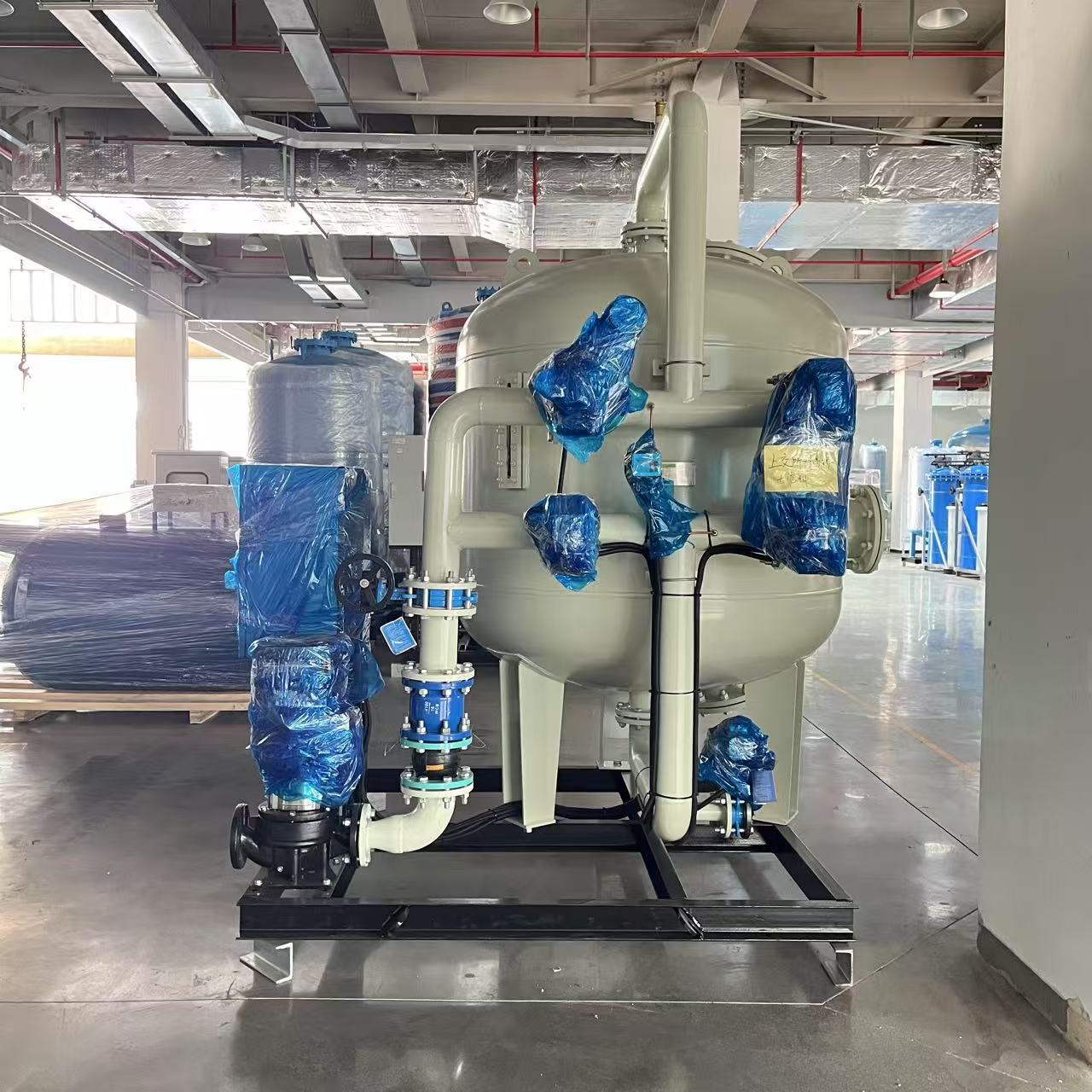
Rapid pressure filters represent the industrial standard. They operate at 2-5 bar inlet pressure and require automated backwashing. Slow sand filters rely on a biologically active microbial layer. They operate at extremely low flow rates (0.08–0.25 m/h). This makes them impractical for most industrial footprints but viable for specific municipal pathogen removal. Upflow sand filters feature bottom-inlet, top-outlet designs. They integrate backwashing with continuous filtration, reducing offline cleaning time.
Different site requirements dictate the physical configuration of the filtration system.
Skid-Mounted Systems: Skid-mounted systems can be factory-assembled and pre-piped, helping reduce on-site installation work.
Deep Bed Filters: These handle heavy solids loading (10 to 1,000+ GPM) with minimal pressure drop. They are essential for stormwater runoff and heavy industrial process water.
Horizontal vessels offer larger filtration areas for high flow rates. Vertical vessels save valuable floor space in tight mechanical rooms. A Top-Discharge Sand Cylinder designed with an internal distribution system to promote uniform flow and effective backwashing.
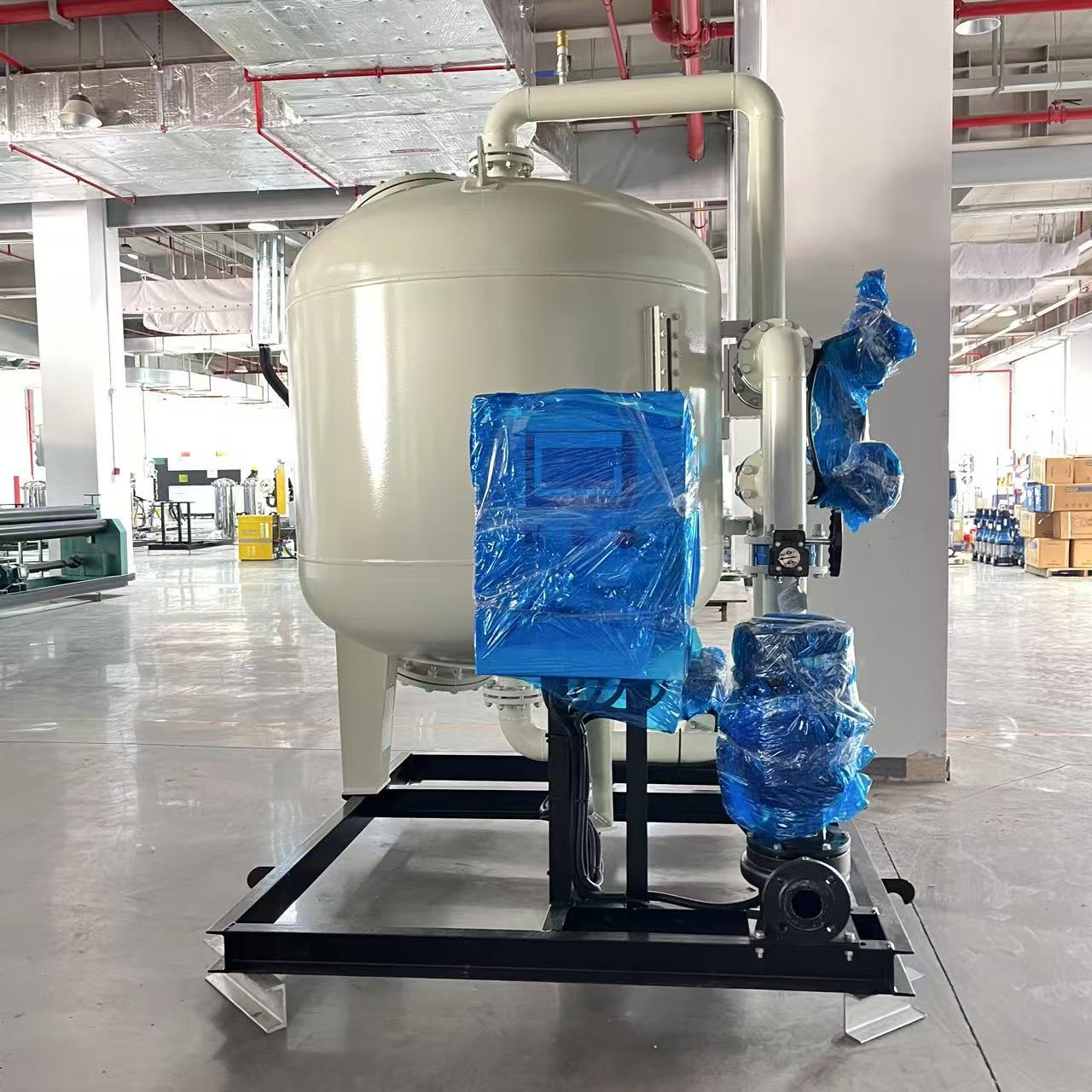
Proper sizing prevents media channeling and ensures consistent water quality. Standard loading rates vary based on the specific application.
| Application | Loading Rate (gpm/ft⊃2;) |
Municipal Water Treatment | 2–4 |
Typical Industrial Process | 4–7 |
Low-Load Industrial | 7–10 |
Utility and Cooling Towers | 10–15 |
Typical filtration rates vary depending on media configuration, influent solids loading and required effluent quality. Sizing is dictated by four core factors. You must evaluate solid concentration, target particle size, available backwash water source, and strict environmental discharge limits.
Pure sand requires 15–20 gpm/ft⊃2; for backwashing. Backwash flow should be selected according to media specifications and water temperature to achieve adequate bed expansion and effective cleaning. Standard cycles last about 10 minutes and run daily to weekly. Introducing 2–4 cfm/ft⊃2; of pressurized air prior to backwash breaks up compacted sediment. This air scour prevents mudball formation. Backwash setups can use self-source water from parallel filters or outside-source water from dedicated tanks.
Vessel materials include fiberglass (FRP), lined carbon steel, and stainless steel. A High-Quality Stainless Steel Sand Filter is necessary for aggressive water chemistry. Stainless steel may be selected where enhanced corrosion resistance is required, subject to the specified pressure, temperature and water chemistry. Heavy-duty steel filters offer maximum longevity. However, their extreme weight requires specialized transport and rigging compared to lighter FRP alternatives.
NSF/ANSI/CAN 50 applies to equipment and products used in pools, spas and recreational water facilities, with requirements covering materials, performance, safety and durability.
A sand filter from ECH serves as critical pre‑treatment for Reverse Osmosis (RO) membrane systems across diverse industrial sectors. It effectively intercepts suspended solids, sediment and colloidal contaminants, lowers SDI value of feed water and prevents premature membrane fouling, therefore extending RO membrane service life and stabilizing overall pure‑water production efficiency.
In battery-manufacturing wastewater treatment, multimedia filters may be used as a polishing step to remove suspended solids and precipitated heavy-metal compounds after chemical precipitation or coagulation. Our stainless‑steel top‑discharge sand cylinders fit well in general industrial circulating water loops, chemical plant process water pretreatment, food‑and‑beverage production water preparation, and manufacturing wastewater tertiary filtration, matching turn‑key project delivery requirements from ECH. Thanks to the 6‑position multi‑functional valve, operators can complete regular backwash and residual impurity purging conveniently without complex auxiliary equipment, cutting routine operational and maintenance costs for continuous industrial production systems.
A sand filter forms the core physical‑filtration barrier for swimming‑pool, spa and commercial water‑park circulating water systems, drastically reducing chemical disinfectant demand by intercepting organic debris, skin residues, hair, algae flocs and suspended turbidity inside the water loop. By removing particulate pollutants before disinfection procedures, it avoids disinfectant consumption caused by organic load and minimizes chloramine by‑product generation, improving bathing comfort while helping facilities comply with recreational water hygiene standards.
For high‑bather‑load environments including splash pads, wave pools, lazy rivers, large public natatoriums and aquatic life‑support systems, engineers often adopt dual‑cell or triple‑cell parallel configurations to handle spiking pollutant loads during peak visiting hours. ECH’s sand filter solutions are well‑proven for hotel leisure pools, resort spas and large‑scale aquatic venues. Equipped with reliable backwash and residual‑discharge functions via multi‑port valves, these units maintain stable filtration performance under long‑duration continuous circulation. When combined with UV disinfection or sodium hypochlorite dosing subsystems, they deliver integrated turn‑key water‑treatment packages for recreational water projects, consistent with our full‑set solution capability for swimming‑pool and spa water treatment.
Backwashing should be initiated when the differential pressure reaches the design setpoint, the preset filtration cycle is completed, or effluent quality begins to deteriorate. Channeling causes breakthrough, compromising downstream processes and damaging sensitive equipment.
Over time, the jagged edges of silica sand become rounded due to hydraulic friction. This drastically reduces particulate capture efficiency. Hydrocarbon contamination permanently blinds anthracite media. This requires complete bed replacement. You must specify alternative media if hydrocarbons are present in the source water.
A sand filter is a highly engineered pressure vessel that dictates the reliability of all downstream water processes. Base your vendor selection on their ability to provide transparent sizing calculations and appropriate metallurgy, like a Stainless Steel Sand Filter for harsh environments. Ensure they offer automated backwash controls tailored to your specific solids loading.
Audit your current water quality, including TSS, particle size distribution, and flow rate requirements.
Consult with an application engineer to determine the optimal vessel diameter and media stratification for your facility.
Implement a strict pressure monitoring protocol to trigger backwashes at a 3-7 PSI differential.
Schedule annual media inspections to check for rounding, mudball formation, or hydrocarbon blinding.
A: A standard single-media sand filter typically captures particles down to 10–15 microns. Multi-media configurations can achieve filtration precision down to 5 microns through depth filtration.
A: Media should be replaced when backwashing no longer restores the baseline pressure drop, or when water quality degrades. Over time, hydraulic friction rounds the jagged edges of the sand, reducing its capture efficiency.
A: A sand filter uses a single layer of silica sand. A multi-media filter uses stratified layers of different media, such as anthracite, sand, and garnet, arranged by decreasing porosity to increase solids-holding capacity.
A: A 30% bed expansion ensures that the media particles are sufficiently separated. This allows trapped solids to be flushed out effectively without washing the media itself out of the vessel.
A: Yes, but it requires specific catalytic media, such as Manganese Greensand or Katalox Light. These media trigger redox reactions to precipitate dissolved iron and heavy metals for filtration.
A: Channeling is caused by excessive pressure drop over 10 PSI or inadequate backwashing. It forces water through paths of least resistance. Prevent it by triggering backwashes at a 3–7 PSI differential.
A: Coagulation introduces chemicals that alter the surface charges of ultra-fine particles. This causes them to clump together into larger flocs that the sand filter can easily capture.


